
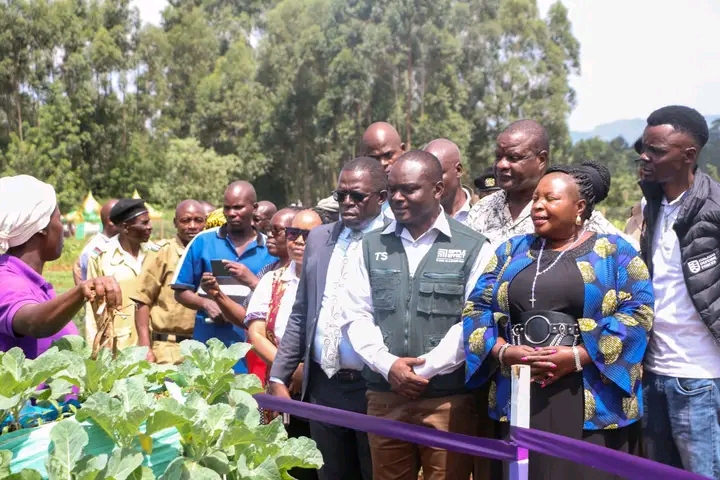
10,000 Farmers to Benefit as Ripple Effect Kenya Establishes Agroecology Training Centre
Farmers in Malava, Kakamega County, and neighbouring parts of Nandi are set to benefit from a new agroecology training centre aimed at addressing climate change, restoring soil fertility and boosting the production of safe and nutritious food.
The centre, being established by Ripple Effect Kenya, will serve as a training hub for thousands of farmers, equipping them with sustainable agricultural practices and climate-resilient farming techniques.
Ripple Effect Kenya Director Titus Sagala says the initiative targets approximately 10,000 farmers who will receive training on climate-resilient agriculture, tree planting and appropriate technologies for adapting to extreme weather conditions.
“Our target is to reach approximately 10,000 farmers with practical skills in agroecology, including climate-resilient farming, tree planting and technologies that can help them cope with prolonged droughts and excessive rainfall,” said Sagala.
He noted that the initiative would empower farmers to improve food production while protecting the environment and restoring degraded soils.
Kakamega County Executive Committee Member for Environment Penina Mukabane says the project will also create economic opportunities for women and young people, particularly in communities that have traditionally depended heavily on sugarcane farming.
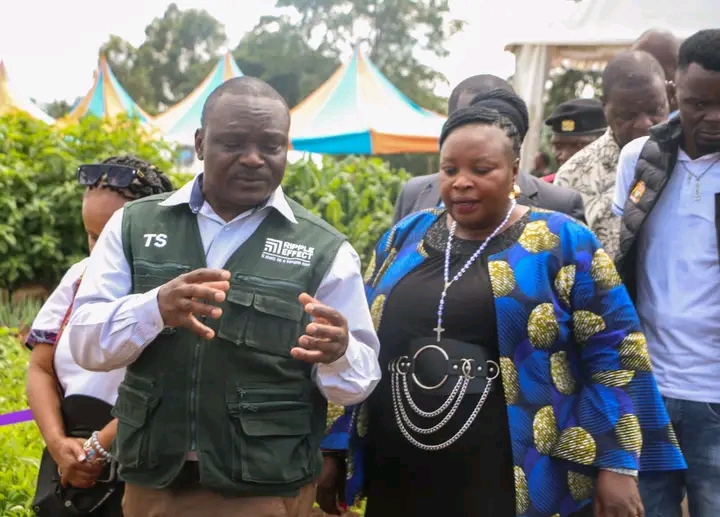
Ripple Effect Director Titus Sagala and CECM Penina Mukabane
“This initiative will go a long way in empowering our women and young people economically. We need to encourage communities, especially those that have depended on sugarcane farming, to embrace diversified and sustainable agricultural practices,” said Mukabane.
Meanwhile, farmer Flora Wambiya says compost manure provides an affordable and environmentally friendly way of restoring soil fertility using locally available materials.
“Making compost manure is not difficult. We can use locally available natural materials to prepare it and restore the fertility of our soils instead of depending entirely on expensive farm inputs,” said Wambiya.
Another farmer, Ruben Malenya, says agroecology offers practical solutions for small-scale farmers facing challenges associated with limited land and prolonged dry spells.
“Agroecology is a good solution for farmers with small pieces of land. It helps us make better use of the available space and adopt farming methods that can sustain production even when rainfall is unreliable,” said Malenya.
The initiative is expected to strengthen farmers’ knowledge of sustainable food production, environmental conservation and climate adaptation while opening up opportunities for improved livelihoods across the targeted communities.