From Jobless Youth to KSh100,000 Monthly: How Bungoma Farmer Brian Abuko Turned Farming Into a Thriving Business.
What started as a small farming venture to feed his family has transformed into a lucrative agribusiness earning Brian Abuko up to KSh100,000 monthly, changing his family’s fortunes and creating employment opportunities for other young people.
Before joining the FIPS Africa Youth Enterprise Programme, Abuko had no job, steady income or clear path to financial independence.
Although he had access to land, he practised subsistence farming, growing food mainly to feed his household without making meaningful income.
“I used to farm to survive. I did not know how to manage the farm as a business,” Abuko recalls.
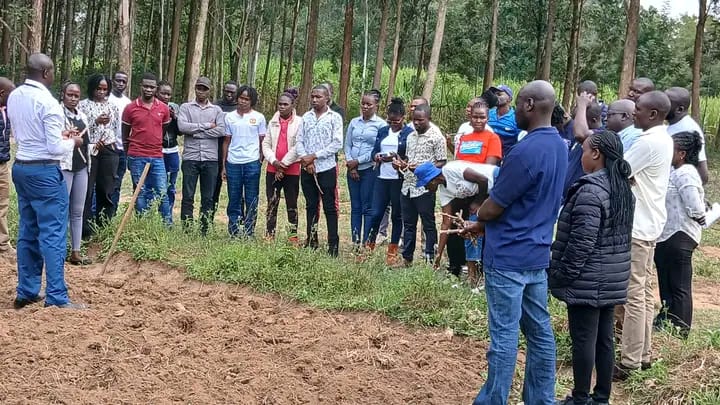
His fortunes began to change after enrolling in the programme, where he received practical training in African leafy vegetable production and good agricultural practices.
Through the training, he learnt how to plan production, manage crops, keep business records and approach farming as a commercial enterprise.
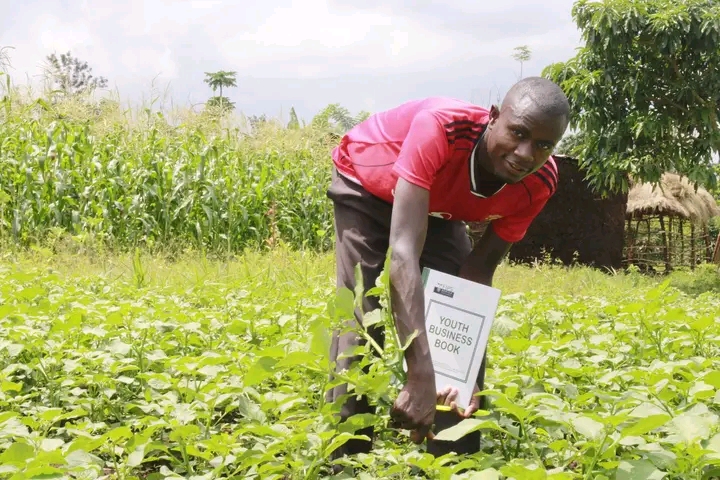
Armed with the new knowledge and a small starter pack, Abuko planted kale and African nightshade on a quarter-acre piece of land.
His first harvest yielded four bags of vegetables, which he sold at KSh3,000 each, earning KSh12,000.
The breakthrough came when a customer consistently purchased his vegetables for an entire week, giving him confidence that vegetable farming could provide a reliable source of income.
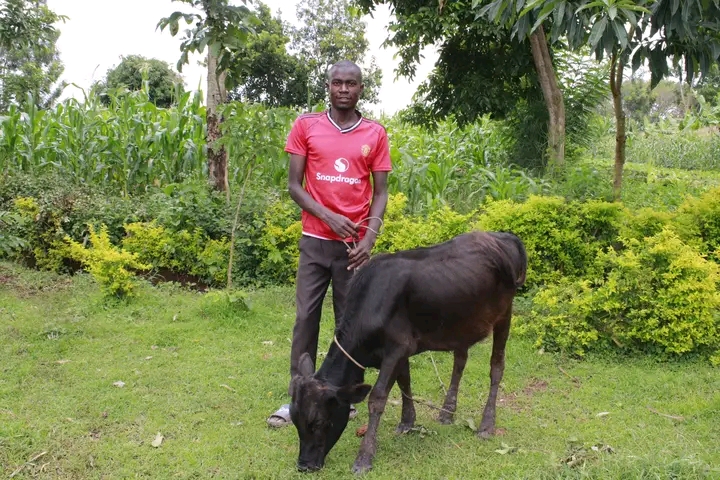
Abuko with his newly acquired cow
Impressed by his progress, his parents allocated him additional land, allowing him to expand production to one acre.
With continued coaching and mentorship, Abuko reinvested his earnings and gradually scaled up his agribusiness.
Today, he earns up to KSh100,000 monthly from vegetable farming. He has also leased an additional acre at an annual cost of KSh12,000 for maize production as he diversifies his agricultural activities.
Beyond increasing his income, Abuko has embraced financial discipline through proper record keeping and savings.
He saves through the Luyekhe Youth Group, where he serves as treasurer, while tracking his business income, expenditure and overall progress.His success has extended beyond personal financial independence.
Abuko now pays school fees for his siblings, caters for his parents’ medical expenses and has purchased a heifer.
His expanding farm also provides casual employment for between five and 10 people during peak farming periods.
“If I were not in agribusiness, my siblings might not be in school, and I would not have money to lease land. Farming has changed my family’s life,” he said.
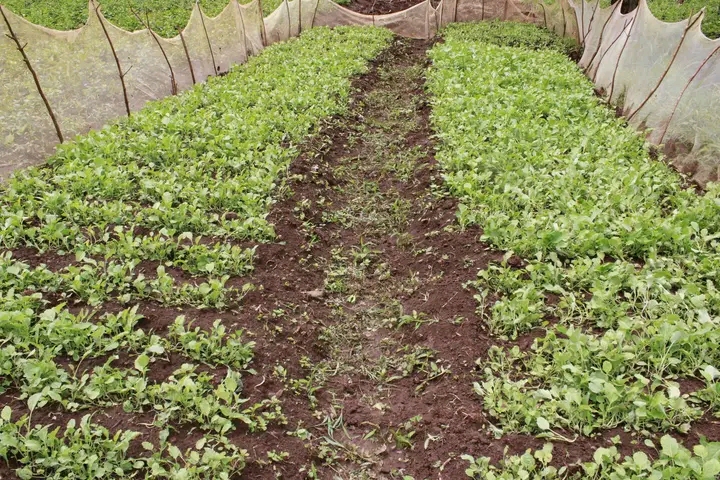
Abuko’s Sukima Wiki seedlings ready for transfer
His journey highlights the potential of agribusiness to address youth unemployment, improve household incomes and create jobs, particularly when young farmers receive the right support.
Through its work as an African systems builder, FIPS Africa connects farmers and young people to practical agricultural knowledge, appropriate technologies, services, mentorship and markets to help transform small-scale farming into sustainable and profitable businesses.