
By Kenneth Wekesa, Bungoma.
Farmers in western Kenya are set to gain access to practical knowledge and improved cassava planting materials as agricultural trainers move to strengthen grassroots extension services in Bungoma and Busia counties.
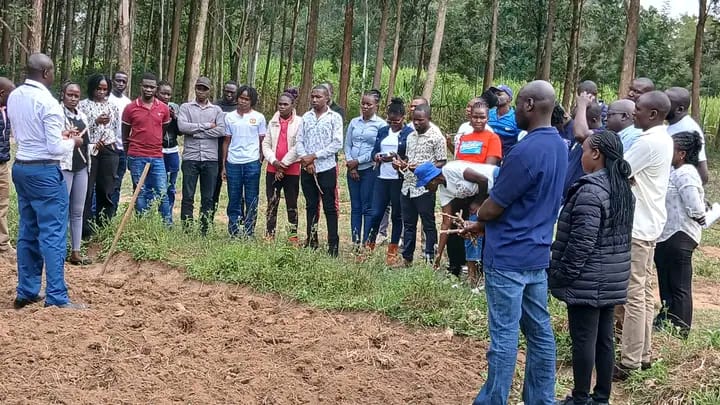
FIPS Africa teams from the two counties recently participated in a practical Training of Trainers (ToT) session on cassava establishment and management at Bukhayo Network.
The training equipped participants with knowledge on good cassava production practices, identification and management of pests and diseases, as well as gross margin analysis to help farmers understand the economic returns of different production choices.
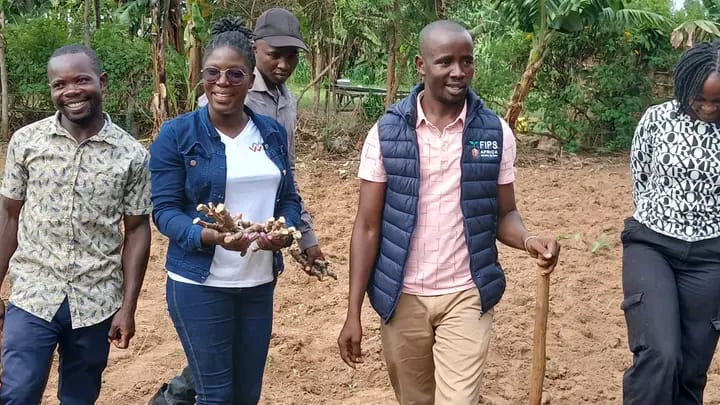
The trained teams will now pass the knowledge to Village-based Advisors (VBAs), who will take the lessons directly to farmers at community level.The VBAs will establish demonstration plots where farmers can observe different cassava varieties under local conditions. They will also conduct practical training sessions and distribute small trial packs of improved cassava cuttings.
Rather than simply recommending a particular variety, farmers will be given an opportunity to plant the cuttings on their own farms, monitor their performance and make informed choices based on their experiences.Farmers will be able to compare varieties based on factors such as yield, maturity period, disease tolerance, cooking quality and sweetness.
They can also assess their suitability for household consumption or processing.Cassava remains an important food and income crop across western Kenya, particularly for households seeking crops that can contribute to both food security and livelihoods.
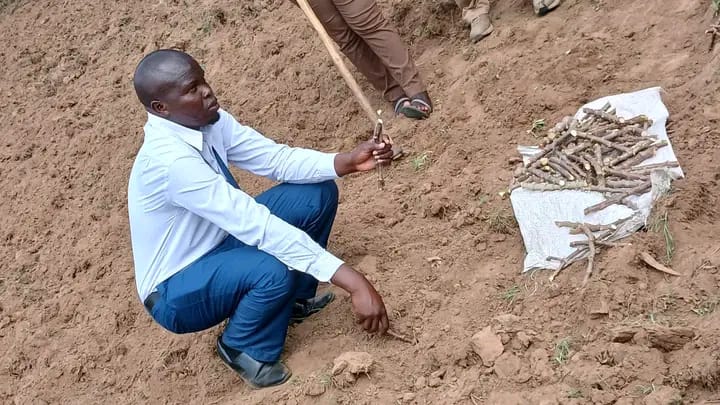
Photo |A trainer training farmers on 18th September 2026
Access to clean planting materials, appropriate varieties and practical production knowledge can help farmers improve the productivity and value of cassava farming.The approach also places farmers at the centre of adoption. Knowledge moves from trainers to VBAs and ultimately to farmers, while farmers test the varieties, share their experiences and determine what works best for their households and markets.
Through the model, FIPS Africa is seeking to strengthen community-based agricultural extension systems that can continue supporting farmers beyond individual projects.