
President William Ruto has reignited debate over Kenya’s constitutional future after calling for a new constitutional framework that would make public participation mandatory in major national decisions.
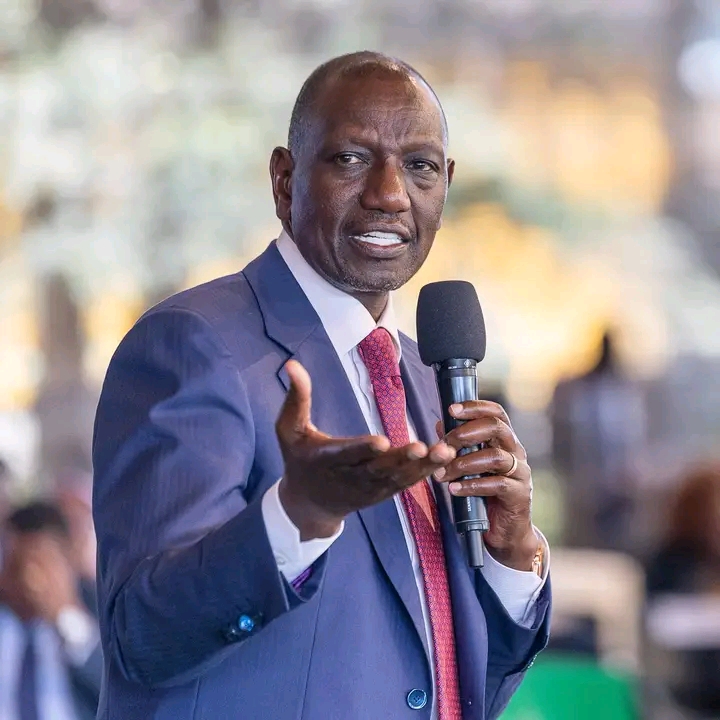
Speaking on Wednesday, August 12, 2026, at the Kenyatta International Convention Centre (KICC) in Nairobi during the launch of consultations on Kenya’s post-Vision 2030 development agenda, Ruto said the country must place citizens at the heart of its long-term planning.
“When Vision 2030 was developed, it was developed before the new Constitution,” Ruto said.
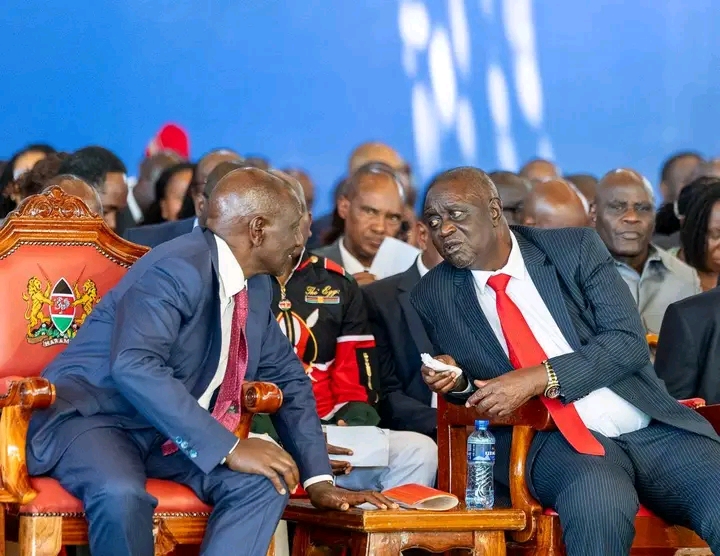
Photo|President Ruto with ODM Boss Oburu Oginga.
“The new Constitution provides us with a better and clearer framework on how to think long-term and therefore it is important that we engage in this exercise in the context of a new Constitution.”
The President then made his position on public participation clear.
“A new Constitution that does not request us to consult the people. No, it is mandatory,” Ruto said.
Ruto argued that inadequate public participation during the development of Vision 2030 contributed to a lack of ownership of the plan among some Kenyans.
“The reason why you find in some cases many people do not understand, do not relate to Vision 2030 was because there was no public participation,” he said.
According to the President, Kenya now has an opportunity to develop a long-term blueprint that is driven by citizens rather than government officials and bureaucrats.
“We have an opportunity this time round… to formulate a long-term plan, one that is done by the people, not by government, not by bureaucrats, by the people themselves,” Ruto said.
He further pledged government support for the process, saying resources would be provided to ensure the consultations are “truly people-centred” and “citizen-driven.”
The consultations are expected to spread across all 47 counties, with Kenyans invited to contribute ideas towards Vision 2060.
Ruto’s remarks are likely to generate intense political debate, particularly as the country approaches the 2027 General Election.
The controversy surrounding constitutional reform has previously demonstrated how politically sensitive changes to Kenya’s supreme law can become.
For now, however, Ruto’s stated position is clear: he says the new constitutional framework should strengthen, rather than remove, the obligation to consult Kenyans.
The bigger question will be whether the proposed reforms ultimately expand citizens’ power and accountability or alter the balance of power between the Executive, Parliament, Judiciary and the people.