
By Wepukhulu Rasto, Nairobi Kenya.
Nigeria has launched an ambitious five-year agriculture investment plan expected to mobilise US$5 billion and create 2.56 million jobs while improving food and nutrition security for nearly three million people.
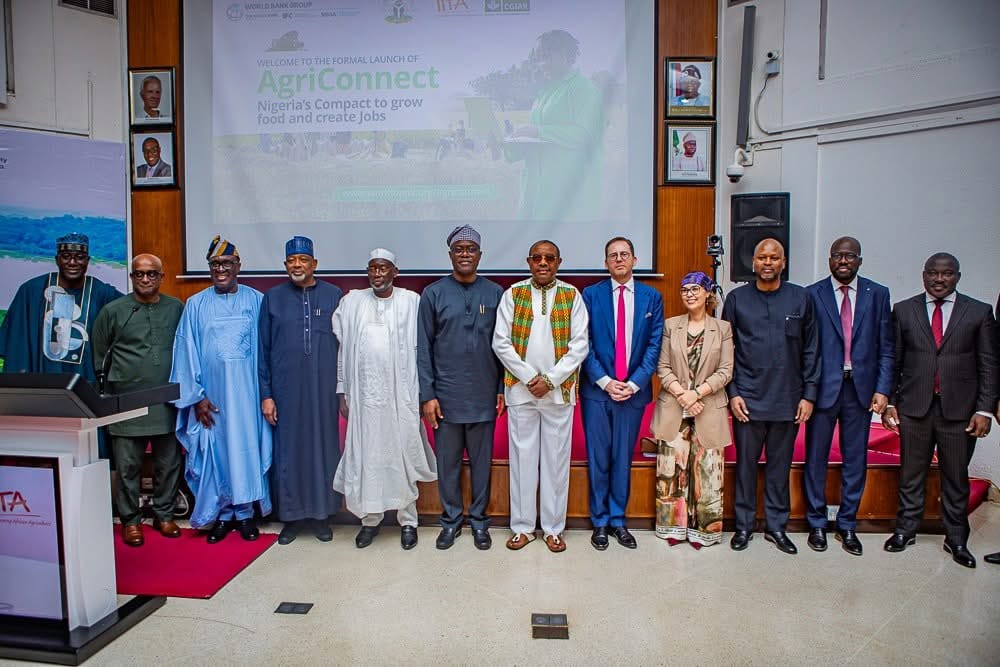
The Nigeria AgriConnect Compact was launched on Friday 25th September 2026 by the Federal Ministry of Agriculture and Food Security (FMAFS), the World Bank Group, the International Fund for Agricultural Development (IFAD) and other development partners.
The national framework seeks to transform Nigeria’s agriculture sector by boosting productivity, strengthening farmers’ access to markets and finance, and attracting greater private-sector investment across priority crop and livestock value chains.
AgriConnect is a World Bank Group initiative designed to help smallholder farmers move from subsistence production to commercially viable surplus production through stronger farmer organisations, improved market linkages, digital solutions and access to finance.
The Nigerian Compact is aligned with President Bola Tinubu’s Renewed Hope Agenda and the National Agricultural Technology and Innovation Policy (NATIP).Over the next five years, the initiative targets nearly three million people with improved food and nutrition security while creating 2.56 million jobs by 2031.
It also targets a 30 per cent increase in average yields for rice, maize and wheat, a 35 per cent increase for cassava, as well as improved productivity and reproductive rates in cattle, small ruminants, pigs and poultry.
“As the only international financial institution exclusively focused on rural transformation, IFAD brings a distinct contribution to AgriConnect by working with smallholder farmers at the first mile of food systems,” said Mohamed El-Ghazaly, IFAD Country Director for Nigeria.
He added that the programme would strengthen farmer collectives, improve post-harvest management and build commercial linkages connecting producers to reliable markets.
“AgriConnect presents an important opportunity for IFAD to build on our long-standing partnership with the Federal Republic of Nigeria and deepen support to smallholder farmers across the country,” El-Ghazaly added.
Nigeria’s agriculture sector contributes about 26 per cent of the country’s GDP and employs approximately 30 per cent of its workforce. However, productivity remains below that of regional peers, while about half of the country’s 37 million hectares of arable land remains underutilised.
The initiative comes as Nigeria faces significant food-security challenges, with more than 31 million people experiencing acute food insecurity amid inflation, insecurity and climate-related shocks.Under the Compact, government, development partners and private investors are expected to mobilise an estimated US$5 billion over five years.
The funds will support smallholder productivity, policy reforms and expanded access to affordable credit, insurance and blended finance for farmers and agribusinesses.
IFAD’s existing portfolio in Nigeria includes the Value Chain Development Programme, the Livelihood Improvement Family Enterprises Project in the Niger Delta and the forthcoming Value Chain Programme in Northern Nigeria, representing combined IFAD financing of nearly US$392 million.
The initiative forms part of the wider World Bank Group AgriConnect programme, which aims to double annual financing for agriculture and agribusiness to US$9 billion while mobilising an additional US$5 billion from partners.Other partners supporting the initiative include the African Development Bank, Inter-American Development Bank, Bayer and Google.